TABLE OF CONTENTS
BUDGET HIGHLIGHTS
TAX REVENUE 2026/2027
GENERAL COMMENTARY
Budget 2026: Stability, Tax Relief and A Quietly Positive Shift for Taxpayers
Budget Day 2026 may have lacked drama, but beneath the surface it delivered a series of quietly positive tax developments. Rather than introducing aggressive new revenue collection measures, the National Treasury opted for stability, targeted relief and structural adjustments that favour taxpayers, savers and small businesses.
In a year where additional tax increases of R20 billion had previously been penciled in, the most notable policy decision was their withdrawal. This alone signals a meaningful improvement in fiscal confidence and a recognition that further tax pressure could have been economically counterproductive.
Coupled with this, stronger-than-expected revenue performance, with gross tax revenue revised upward by R21.3 billion, has provided government with the fiscal space to prioritise relief over new taxation.
A More Positive Tax Story Than Expected
While the Budget has been described as “boring”, the reality is that it is fiscally constructive. Government has deliberately chosen predictability over shocks, and relief over aggressive revenue extraction.
Most importantly, taxpayers will receive inflationary relief for the first time in two years, with personal income tax brackets, rebates and medical tax credits fully adjusted for inflation. This directly protects individuals from bracket creep and prevents a silent increase in effective tax rates.
Lower and middle-income taxpayers in particular stand to benefit the most from these adjustments, reinforcing the progressive design of the tax system while providing some breathing room in a high cost-of-living environment.
Meaningful Increases to Key Tax Thresholds and Limits
Beyond the headline bracket adjustments, Chapter 4 of the Budget Review reveals several underappreciated positives that materially improve the tax landscape. Government has proposed far reaching increases to tax thresholds and limits to promote entrepreneurship, savings and fairness across the tax system.
Key examples include:
- VAT compulsory registration threshold increased from R1 million to R2.3 million
- Voluntary VAT registration threshold increased from R50 000 to R120 000
- CGT primary residence exclusion increased from R2 million to R3 million
- Annual CGT exclusion increased from R40 000 to R50 000
- Tax-free investment annual limit increased from R36 000 to R46 000
- Retirement fund contribution deduction limit increased from R350 000 to R430 000
- Donations tax exemption for individuals increased from R100 000 to R150 000
- Turnover tax threshold for micro businesses significantly expanded
These changes are not merely technical. They reduce compliance burdens for small businesses, incentivise savings and investment, and modernise thresholds that in some cases had not been adjusted for over a decade.
For entrepreneurs and growing businesses especially, the higher VAT and turnover tax thresholds represent a meaningful easing of administrative pressure and potential cash-flow benefits.
Fiscal Discipline Without New Tax Shocks
Another constructive signal is that government has now achieved a third consecutive primary budget surplus, while maintaining fiscal discipline without resorting to major new tax hikes.
This aligns with Treasury’s broader strategy to stabilise national debt levels, reduce borrowing costs and improve investor confidence. A stable fiscal framework, combined with predictable tax policy, is generally viewed more favourably by markets than sudden and surprise revenue-raising measures.
Importantly, the decision to withdraw previously proposed tax increases was driven by improving fiscal metrics and concerns about the negative economic impact of additional tax burdens.
SARS: Strong Performance, Stronger Enforcement Ahead
The Budget documents also reflect a resilient tax administration environment. Higher-than-expected VAT, corporate income tax and dividends tax collections have supported the improved revenue outlook. At the same time, SARS continues to receive additional funding for modernisation, enforcement and data analytics, signaling that compliance enforcement will remain a key focus area.
The tax authority’s expanding use of technology and targeted compliance initiatives, particularly in respect of high-net-worth individuals, large businesses and the digital economy, indicates that while the policy environment is becoming more stable, enforcement will likely become more sophisticated.
A Narrow Tax Base Still Remains a Structural Risk
Despite the positive adjustments, structural risks remain. The personal income tax system continues to rely heavily on a narrow tax base, with a small percentage of taxpayers contributing a disproportionately large share of tax revenue collected by SARS.
This reinforces Treasury’s long-standing view that sustainable revenue growth will ultimately depend more on economic expansion and the broadening of the tax base, rather than on increasing tax rates.
Economic Realities Still Temper the Outlook
The Minister acknowledged ongoing economic constraints, including logistics inefficiencies, infrastructure weaknesses and municipal distress. These factors continue to weigh on growth and limit the scope for more aggressive tax relief.
Nonetheless, the resilience of the tax system, even in a weak growth environment, suggests improved administrative efficiency and stable underlying tax buoyancy.
Conclusion: A Quietly Constructive Budget
Budget 2026 is not a headline-grabbing Budget. It introduces no surprise sweeping reforms and no major tax increases. However, that is precisely its strength.
The withdrawal of planned tax hikes, full inflationary relief, substantial increases in key tax thresholds, and a stable fiscal framework collectively point to a more taxpayer-friendly and growth-conscious policy stance.
In a volatile global and domestic environment, predictability, restraint and incremental relief may well be the most positive tax outcome South African taxpayers could have expected.

Darren Britz
Partner & Head of Tax Legal

Richan Schwellnus
Tax Attorney
INDIVIDUAL TAX
TAX RATES & REBATES
Individuals, Estates & Special Trusts
Year ending 28 February 2026/27
| Taxable Income | Rate of tax (R) |
|---|---|
| R1 – R245 100 | 18% of taxable income |
| R245 101 – R383 100 | R44 118 + 26% of taxable income above R245 100 |
| R383 101 – R530 200 | R79 998 + 31% of taxable income above R383 100 |
| R530 201 – R695 800 | R125 599 + 36% of taxable income above R530 200 |
| R695 801 – R887 000 | R185 215 + 39% of taxable income above R695 800 |
| R887 001 – R1 878 600 | R259 783 + 41% of taxable income above R887 000 |
| R1 878 601 and above | R666 339 + 45% of taxable income above R1 878 600 |
Year ending 28 February 2025/26
| Taxable Income | Rate of tax (R) |
|---|---|
| R1 – R237 100 | 18% of taxable income |
| R237 101 – R370 500 | R42 678 + 26% of taxable income above R237 100 |
| R370 501 – R512 800 | R77 362 + 31% of taxable income above R370 500 |
| R512 801 – R673 000 | R121 475 + 36% of taxable income above R512 800 |
| R673 001 – R857 900 | R179 147 + 39% of taxable income above R673 000 |
| R857 901 – R1 817 000 | R251 258 + 41% of taxable income above R857 900 |
| R1 817 001 and above | R644 489 + 45% of taxable income above R1 817 000 |
| Rebates | 2026/2027 | 2025/2026 |
|---|---|---|
| Primary | R17 820 | R17 235 |
| Secondary (Persons 65 and older) | R9 765 | R9 444 |
| Tertiary (Persons 75 and older) | R3 249 | R3 145 |
| Age | Tax threshold | |
| Below age 65 | R99 000 | R95 750 |
| Age 65 to below 75 | R153 250 | R148 217 |
| Age 75 and over | R171 300 | R165 689 |
MEDICAL TAX CREDIT RATES
| Per month (R) | 2026/2027 | 2025/2026 |
|---|---|---|
| For the taxpayer who paid the medical scheme contributions | R376 | R364 |
| For the first dependent | R376 | R364 |
| For each additional dependent(s) | R254 | R246 |
TAKE-HOME PAY
The table below sets out a comparison of the take-home pay that an individual can expect based on the 2025/2026 and 2026/2027 tax tables:
| 2026/2027 | 2026/2027 | 2026/2027 | 2025/2026 | 2025/2026 | 2025/2026 | ||
|---|---|---|---|---|---|---|---|
| Monthly gross | Annual equivalent | Under 65 | 65 – 74 | Over 75 | Under 65 | 65 – 74 | Over 75 |
| R8 250.00 | R99 000.00 | R8 250.00 | R8 250.00 | R8 250.00 | R8 250.00 | R8 250.00 | R8 250.00 |
| R10 000.00 | R120 000.00 | R9 685.00 | R10 000.00 | R10 000.00 | R9 636.25 | R10 000.00 | R10 000.00 |
| R15 000.00 | R180 000.00 | R13 785.00 | R14 598.75 | R14 869.50 | R13 736.25 | R14 523.25 | R14 785.33 |
| R20 000.00 | R240 000.00 | R17 885.00 | R18 698.75 | R18 969.50 | R17 816.92 | R18 603.92 | R18 866.00 |
| R30 000.00 | R360 000.00 | R25 319.00 | R26 132.75 | R26 403.50 | R25 216.92 | R26 003.92 | R26 266.00 |
| R40 000.00 | R480 000.00 | R32 315.15 | R33 129.00 | R33 399.75 | R32 160.67 | R32 947.67 | R33 209.75 |
| R50 000.00 | R600 000.00 | R38 924.42 | R39 738.17 | R39 738.17 | R38 697.33 | R39 484.33 | R39 746.42 |
| R70 000.00 | R840 000.00 | R51 363.92 | R52 177.67 | R52 177.67 | R51 079.83 | R51 866.83 | R52 128.92 |
| R110 000.00 | R1 320 000.00 | R75 042.25 | R75 856.00 | R75 856.00 | R74 709.67 | R75 496.67 | R75 758.75 |
| R130 000.00 | R1 560 000.00 | R86 842.25 | R87 656.00 | R87 656.00 | R86 509.67 | R87 296.67 | R87 558.75 |
| R170 000.00 | R2 040 000.00 | R109 904.25 | R110 718.00 | R110 718.00 | R109 366.33 | R110 153.33 | R110 415.42 |
The table below sets out a comparison of the PAYE that would have been/will be deducted from an individual’s salary in 2025/2026 and 2026/2027:
| 2026/2027 | 2026/2027 | 2026/2027 | 2025/2026 | 2025/2026 | 2025/2026 | ||
|---|---|---|---|---|---|---|---|
| Monthly gross | Annual equivalent | Under 65 | 65 – 74 | Over 75 | Under 65 | 65 – 74 | Over 75 |
| R8 250.00 | R99 000.00 | – | – | – | – | – | – |
| R10 000.00 | R120 000.00 | R315.00 | – | – | R363.75 | – | – |
| R15 000.00 | R180 000.00 | R1 215.00 | R401.25 | R130.50 | R1 263.75 | R476.75 | R214.67 |
| R20 000.00 | R240 000.00 | R2 115.00 | R1 301.25 | R1 030.50 | R2 183.08 | R1 396.08 | R1 134.00 |
| R30 000.00 | R360 000.00 | R4 681.00 | R3 867.25 | R3 596.50 | R4 783.08 | R3 996.08 | R3 734.00 |
| R40 000.00 | R480 000.00 | R7 684.75 | R6 871.00 | R6 600.25 | R7839.33 | R7 052.33 | R6 790.25 |
| R50 000.00 | R600 000.00 | R11 075.58 | R10 261.83 | R9 991.08 | R11 302.67 | R10 515.67 | R10 253.58 |
| R70 000.00 | R840 000.00 | R18 636.08 | R17 822.33 | R17 551.58 | R18 920.17 | R18 133.17 | R17 871.08 |
| R110 000.00 | R1 320 000.00 | R34 957.75 | R34 144.00 | R33 873.25 | R35 290.33 | R34 503.33 | R34 241.25 |
| R130 000.00 | R1 560 000.00 | R43 157.75 | R42 344.00 | R42 073.25 | R43 490.33 | R42 703.33 | R42 441.25 |
| R150 000.00 | R2 040 000.00 | R60 095.75 | R59 282.00 | R59 011.25 | R60 633.67 | R59 846.67 | R59 584.58 |
INTEREST EXEMPTION
| South African Sourced Interest | |
|---|---|
| Persons under 65 years | R23 800 |
| Persons 65 years and older | R34 500 |
South African sourced interest income earned by non-residents is exempt if the non-resident was absent from the country for and aggregate of 183 days in the 12 months preceding the accrual of that interest.
TAX-FREE INVESTMENTS
Amounts received by or accrued to an individual in respect of particular prescribed investment instruments and policies are exempt. Contributions to these prescribed investments/policies are subject to an annual limit of R46 000. Currently, a R500 000 lifetime limit applies.
DIVIDENDS
Dividends received by individuals from South African companies are generally exempt from income tax, but dividends tax at a rate of 20% is withheld by the entities paying the dividends to the individuals.
FOREIGN DIVIDENDS
Most foreign dividends received by individuals from foreign companies (shareholding of less than 10% in the foreign company) are taxable at a maximum effective rate of 20%. No deductions are allowed for expenditure to produce foreign dividends.
FOREIGN INTEREST
Foreign interest received by or accrued to a resident is subject to normal tax in South Africa.
TRAVEL EXPENSES
Rates per kilometre, which may be used in determining the allowable deduction for business travel against an allowance or advance where actual costs are not claimed, are determined by using the table on the SARS website www.sars.gov.za.
- If the travel allowance is applicable to a portion of the tax year, the fixed cost is reduced proportionately.
- Where the travel allowance is based on actual distance travelled by the employee for business purposes, no tax is payable on an allowance paid by an employer to an employee, up to the rate of R4,95 per kilometre regardless of the value of the vehicle or distance travelled. This alternative is not available if other compensation in the form of an allowance or reimbursement (other than for parking or toll fees) is received from the employer in respect of the vehicle.
- It is compulsory to keep a travel logbook in order to claim business travel expenses.
- When claiming actual expenditure, the cost of the vehicle must be limited to the maximum allowed value as per the SARS website www.sars.gov.za for the purposes of calculating finance charges and wear and tear.
SUBSISTENCE ALLOWANCE
Where the recipient is obliged to spend at least one night away from his or her usual place of residence on business, and the accommodation to which that allowance or advance relates is in the Republic of South Africa, and the allowance or advance is granted to pay for meals and incidental costs or incidental costs only, an amount, published on the SARS website www.sars.gov.za, under Legal Counsel / Secondary Legislation / Income Tax Notices / 2026, is deemed to have been expended per day.
Where the accommodation to which that allowance or advance relates is outside the Republic of South Africa, a specific amount per country is deemed to have been expended. Details of these amounts are published on the SARS website under Legal Counsel / Secondary Legislation / Income Tax Notices / 2026.
Where the recipient is by reason of the duties of his or her office or employment obliged to spend a part of a day away from his or her usual place of work or employment, a reimbursement or advance for expenditure actually incurred by the recipient is exempt if the recipient is allowed by his or her principal to incur expenditure on meals and other incidental costs for that part of a day and the amount of the expenditure does not exceed an amount published on the SARS website www.sars.gov.za, under Legal Counsel / Secondary Legislation / Income Tax Notices / 2026.
TRAVELLING ALLOWANCE
Rates per kilometre, which may be used in determining the allowable deduction for business travel against an allowance or advance where actual costs are not claimed, are determined using the table published on the SARS website www.sars.gov.za, under Legal Counsel / Secondary Legislation / Income Tax Notices / 2026 / Fixing of rate per kilometre in respect of motor vehicles.
Note:
- 80% of the travelling allowance must be included in the employee’s remuneration for the purposes of calculating PAYE. The percentage is reduced to 20% if the employer is satisfied that at least 80% of the use of the motor vehicle for the tax year will be for business purposes.
- No fuel cost may be claimed if the employee has not borne the full cost of fuel used in the vehicle, and no maintenance cost may be claimed if the employee has not borne the full cost of maintaining the vehicle (e.g. if the vehicle is covered by a maintenance plan).
- The fixed cost must be reduced on a pro-rata basis if the vehicle is used for business purposes for less than a full year.
- The actual distance travelled during a tax year, and the distance travelled for business purposes substantiated by a log book, are used to determine the costs which may be claimed against a travelling allowance.
RETIREMENT FUND CONTRIBUTIONS
Contributions to a pension, provident or retirement annuity fund during a tax year are deductible by the member of the fund. The deduction is limited to the greater of:
- 27.5% of the employee’s remuneration for PAYE purposes (excluding retirement fund lump sums and severance benefits); or
- 27.5% of the employee’s taxable income (excluding retirement fund lump sums and severance benefits).
The deduction is further limited to the lower of R430 000 or 27.5% of taxable income, before the inclusion of a taxable capital gain.
DONATIONS
Deductions in respect of donations to certain public benefit organisations are limited to 10% of taxable income (excluding retirement fund lump sums and severance benefits). The amount of donations exceeding 10% of the taxable income is treated as a donation to qualifying public benefit organisations in the following tax year.
Donations tax is levied at a flat rate of 20% on the cumulative value of donations not exceeding R30 million and a rate of 25% on the cumulative value exceeding R30 million. This was effective March 2018. Donations made prior to this date must not be included in the cumulative total.
The first R150 000 of donations in each year by an individual is exempt from donations tax, as well as donations to spouses and certain public benefit organisations.
Donations made by non-residents are also exempt from donations tax.
LUMP SUM BENEFITS
Lump sum benefits in consequence of the withdrawal of membership of a retirement fund, including amounts assigned in terms of divorce settlements in certain circumstances, other than death/retirement lump sum benefits, are taxed according to the following table:
| Taxable income from withdrawal benefits | Tax payable |
|---|---|
| R1 – R27 500 | 0% of taxable income |
| R27 501 – R726 000 | 18% of taxable income above R27 500 |
| R726 001 – R1 089 000 | R125 730 + 27% of taxable income above R726 000 |
| R1 089 001 and above | R223 740 + 36% of taxable income above R1 089 000 |
Lump sum benefits in consequence of retirement/death are taxed according to the following table:
| Taxable income from retirement benefits | Tax payable |
|---|---|
| R1 – R550 000 | 0% of taxable income |
| R550 001 – R770 000 | 18% of taxable income above R550 000 |
| R770 001 – R1 155 000 | R39 600 + 27% of taxable income above R770 000 |
| R1 155 001 and above | R143 550 + 36% of taxable income above R1 155 000 |
* Taxable income is cumulative and includes all lump sum payments whether on retirement (after 1 October 2007) or withdrawal (after 1 March 2009), or a severance benefit (after 1 March 2011).
CAPITAL GAINS TAX (CGT)
| Maximum effective rate of tax | |
|---|---|
| Individuals and special trusts | 18% |
| Companies | 21.6% |
| Other trusts | 36% |
| Inclusion rates | |
|---|---|
| Individuals, special trusts and individual policyholder funds | 40% |
| Companies and trusts | 80% |
| Exclusions | |
|---|---|
| Individuals, special trusts and individual policyholder funds | R50 000 |
| Individuals in year of death | R440 000 |
| Primary residence exclusion on the disposal of a primary residence | R3 million gain/loss |
| Small business assets (persons over age 55 and market value of assets not more than R10 million) | R2.7 million |
| CGT example | ||
|---|---|---|
| Salary | R180 000 | |
| Sale of primary residence | ||
| – Proceeds | R5 000 000 | |
| – Agent commission | (R200 000) | |
| – Purchase price | (R1 500 000) | |
| – Improvements | (R150 000) | |
| Sub total | R3 150 000 | |
| Primary residence exclusion | (R3 000 000) | |
| Gain from sale | R150 000 | |
| Sale of shares | ||
| – Proceeds | R50 000 | |
| – Purchase price | (R35 000) | |
| Gain from sale | R15 000 | |
| Total capital gains | R165 000 | |
| Less: Annual exclusion | (R50 000) | |
| Total | R115 000 | |
| Apply inclusion rate (40%) | R46 000 | |
| Total taxable income | R226 000 |
TRUSTS
TRUSTS TAX RATES
| Rate of tax | 2023/2024 | 2024/2025 | 2025/2026 | 2026/2027 |
|---|---|---|---|---|
| All taxable income | 40% | 41% | 45% | 45% |
Special trusts are taxed at the rates applicable to individuals, but are not entitled to any rebate. The 40% inclusion rate for a taxable capital gain applies to both types of special trusts and 80% inclusion rate for normal trusts.
A special trust is one created:
- Solely for the benefit of a person affected by a mental illness or serious physical disability which prevents that person from earning sufficient income to maintain him/herself. Where the person for whose benefit the trust was established dies prior to or on the last day of the year of assessment, the trust will no longer be regarded as a special trust; or
- As a testamentary trust established solely for the benefit of minor children who are alive and related to the deceased on the date of death. Where the youngest beneficiary turns 18 years of age prior to or on the last day of the year of assessment, the trust will no longer be regarded as a special trust.
SECTION 7C
What is Section 7C?
Section 7C is an anti-avoidance provision designed to prevent avoidance of both donations tax and estate duty through low or no interest loans granted to trusts.
Implications of Section 7C?
SARS will deem the interest foregone on a loan to a trust where the interest is less than the official interest rate, as a donation. This donation is deemed to be made on the last day of the year of assessment of the trust and will be subject to donation tax.
The lender must be either a connected natural person or a company who granted the loan at the instance of that natural person. This applies to all loan account balances on or after 1 March 2017.
The provision does not apply to loans granted to a trust for the purchase of the lender’s or the spouse’s primary residence.
The official interest rate is linked to the repurchase rate plus 1% and is published on the SARS website. The most recent changes are as follows:
| Date from | Date to | Rate |
|---|---|---|
| 01.12.2015 | 31.01.2016 | 7.25% |
| 01.02.2016 | 31.03.2016 | 7.75% |
| 01.04.2016 | 31.07.2017 | 8.00% |
| 01.08.2017 | 31.03.2018 | 7.75% |
| 01.04.2018 | 30.11.2018 | 7.50% |
| 01.12.2018 | 31.07.2019 | 7.75% |
| 01.08.2019 | 31.01.2020 | 7.50% |
| 01.02.2020 | 31.03.2020 | 7.25% |
| 01.04.2020 | 30.04.2020 | 6.25% |
| 01.05.2020 | 31.05.2020 | 5.25% |
| 01.06.2020 | 31.07.2020 | 4.25% |
| 01.08.2020 | 31.11.2020 | 4.50% |
| 01.12.2021 | 31.01.2022 | 4.75% |
| 01.02.2022 | 31.03.2022 | 5.00% |
| 01.04.2022 | 31.05.2022 | 5.25% |
| 01.06.2022 | 31.07.2022 | 5.75% |
| 01.08.2022 | 30.09.2022 | 6.50% |
| 01.10.2022 | 31.11.2022 | 7.25% |
| 01.12.2022 | 31.01.2023 | 8.00% |
| 01.02.2023 | 31.03.2023 | 8.20% |
| 01.04.2023 | 31.05.2023 | 8.75% |
| 01.06.2023 | 30.09.2024 | 9.25% |
| 01.10.2024 | 30.11.2024 | 9.00% |
| 01.12.2024 | 31.01.2025 | 8.75% |
| 01.02.2025 | 31.05.2024 | 8.50% |
| 01.06.2025 | 31.08.2025 | 8.25% |
| 01.09.2025 | 30.11.2025 | 8.00% |
| 01.12.2025 | Until change in Repo* rate | 7.75% |
Non-Residents:
Loans by non-residents are not subject to the effect of donations tax as a result of Section 7C since non-residents are exempt from donations tax. Loans from non-residents may nonetheless be subject to transfer pricing provisions.
Distributions to non-residents are fully taxable in the trust at the trust’s applicable tax rate.
COMPANIES
COMPANY TAX RATES
Financial years ending on any date between 1 April 2026.
| Basic rate (other than entities specified below) | 27% |
Financial years ending on any date between 1 April 2023 and 1 April 2026.
| Basic rate (other than entities specified below) | 28% |
Small Business Corporations (annual turnover of R20 million or less):
Financial years ending on any date between 1 April 2026 and 31 March 2027.
| Taxable income | Rate of tax |
|---|---|
| R1 – R99 000 | 0% of taxable income |
| R99 001 – R365 000 | 7% of taxable income above R99 001 |
| R365 001 – R550 000 | R18 620 + 21% of taxable income above R365 000 |
| R550 001 and above | R57 470 + 27% of the amount above R550 000 |
Micro-business (elective presumptive turnover tax for qualifying annual turnover of R1 million or less):
Financial years ending on any date between 1 March 2026 and 28 February 2027.
| Taxable turnover | Rate of tax |
|---|---|
| R1 – R600 000 | 0% of taxable turnover |
| R600 001 – R950 000 | 1% of taxable turnover above R600 000 |
| R950 001 – R1 400 000 | R3 500 + 2% of taxable turnover above R950 000 |
| R1 400 001 and above | R12 500 + 3% of taxable turnover above R1 400 000 |
DONATIONS
In the case of a taxpayer who is not an individual, exempt donations are limited to casual gifts not exceeding R20 000 per annum in total.
Donations between companies forming part of the same group of companies and donations to certain public benefit organisations are exempt from donations tax.
VAT
Compulsory Registration
It is mandatory for a business to register for VAT if the total value of taxable supplies made in any consecutive twelve month period exceeded or is likely to exceed R2.3 million. The business must complete a VAT 101 – Application for Registration form and submit it to SARS within 21 days from date of exceeding R2.3 million.
Voluntary Registration
A business may also choose to register voluntarily for VAT if the value of taxable supplies made or to be made is less than R2.3 million, but has exceeded R120 000 in the past period of 12 months.
DIVIDENDS
Dividends are subject to dividends tax which is withheld from the gross dividend declared, before being paid to the beneficial owners. The entity declaring the dividend is liable for withholding the tax and paying it to SARS.
The following rates are applicable:
| Beneficial owner | Dividend withholding tax rate |
|---|---|
| Resident individuals | 20% |
| Resident companies | 0% |
| Non-resident individuals and companies | Refer to tax rates per South African DTA Agreements – available on the SARS website |
FRINGE BENEFITS
Employer-owned vehicles
- The taxable value is 3.5% of the determined value (the cash cost including VAT) of each vehicle per month. Where the vehicle is:
- the subject of a maintenance plan when the employer acquired the vehicle the taxable value is 3,25% of the determined value; or
- acquired by the employer under an operating lease, the taxable value is the cost incurred by the employer under the operating lease plus the cost of fuel.
- 80% of the fringe benefit must be included in the employee’s remuneration for the purposes of calculating PAYE. The percentage is reduced to 20% if the employer is satisfied that at least 80% of the use of the motor vehicle for the tax year will be for business purposes.
- On assessment, the fringe benefit for the tax year is reduced by the ratio of the distance travelled for business purposes, substantiated by a log book, divided by the actual distance travelled during the tax year.
- On assessment further relief is available for the cost of licence, insurance, maintenance and fuel for private travel, if the full cost thereof has been borne by the employee and if the distance travelled for private purposes is substantiated by a log book.
Interest-free or low-interest loans
The difference between interest charged at the official rate, and the actual amount of interest charged, is to be included in gross income.
Residential accommodation
- The value of the fringe benefit to be included in gross income is the lower of the benefit calculated by applying a prescribed formula, or the cost to the employer if the employer does not have full ownership of the accommodation.
- The formula will apply if the accommodation is owned by the employee, but it does not apply to holiday accommodation hired by the employer from non-associated institutions.
SECURITIES TRANSFER TAX
Securities transfer tax (STT) is payable upon the transfer of unlisted shares. This includes the buying back, redemption or cancellation of shares. STT is levied at 0.25% of the value of the shares transferred and is due within two months after the end of the month in which the shares were transferred.
TAX ON INTERNATIONAL AIR TRAVEL
R190 per passenger departing on international flights, excluding flights to Botswana, Lesotho, Namibia and eSwatini, in which case the tax is R100.
SKILLS DEVELOPMENT LEVY
A skills development levy is payable by employers at a rate of 1% of the total remuneration paid to employees. Employers paying annual remuneration of less than R500 000 are exempt from the payment of Skills Development Levies.
UNEMPLOYMENT INSURANCE CONTRIBUTIONS
- Unemployment insurance contributions are payable monthly by employers, on the basis of a contribution of 1% by employers and 1% by employees, based on the employees’ remuneration below a certain amount
- Employers not registered for PAYE or SDL must pay the contributions to the Unemployment Insurance Commissioner.
- The proposed UIF ceiling limit increase is R17 711.58 per month.
- Effective since 1 June 2021, under section 6(2) of the Unemployment Insurance Contributions Act, 2002 (Act No. 4 of 2002), the UIF contributions amount shall not apply to so much of the remuneration paid or payable by an employer to an employee during any month, as exceeds R17 712.
OTHER
PROVISIONAL TAX
A provisional taxpayer is any person who earns income by way of remuneration from an unregistered employer, or income that is not remuneration, or an allowance or advance payable by the person’s principal. An individual is not required to pay provisional tax if he or she does not carry on any business, and the individual’s taxable income:
- Will not exceed the tax threshold for the tax year; or
- From interest, dividends, foreign dividends, rental from letting of fixed property, and remuneration from an unregistered employer will be R30 000 or less for the tax year.
Provisional tax returns showing an estimation of total taxable income for the year of assessment are required from provisional taxpayers.
Deceased estates are not provisional taxpayers.
ESTATE DUTY
| Value of estate | Rate |
|---|---|
| R0 to R30 000 000 | 20% of the dutiable amount of a deceased estate |
| Exceeding R30 000 000 | 25% of the dutiable amount of a deceased estate |
Estate duty is levied on the dutiable amount of a deceased estate (property of residents and SA property of non-residents). Deductions include: a standard abatement of R3.5 million per estate (R7 million for a married couple) and certain other deductions, the most important of which is the deduction for property accruing to a surviving spouse.
TRANSFER DUTY
Paid on acquisition of immovable property where the transaction is not subject to VAT. Transfer duty is also payable on the acquisition of residential property through an interest in a company or trust. The rates of duty are as follows:
Years of assessment commencing on 1 March 2026 or ending on 28 February 2027.
| Value of property | Rate |
|---|---|
| R1 – R1 210 000 | 0% |
| R1 210 001 – R1 663 800 | 3% of the value above R1 210 000 |
| R1 663 801 – R2 329 300 | R13 614 + 6% of the value above R 1 663 800 |
| R2 329 301– R2 994 800 | R53 544+ 8% of the value above R2 329 300 |
| R2 994 801 – R13 310 000 | R106 784+11% of the value above R2 994 800 |
| R13 310 001 and above | R1 241 456 + 13% of the value exceeding R13 310 000 |
WITHHOLDING TAXES
| Other payments to non-residents | |
|---|---|
| Royalties | 15% |
| Interest | 15% |
| Sportsmen and entertainers who perform in SA | 15% |
| Fixed property acquired in SA from a seller that is a non-resident: | |
| If the non-resident is a natural person | 7.5% |
| If the non-resident is a company | 10% |
| If the non-resident is a trust | 15% |
SARS INTEREST RATES
| Rate of interest (from 1 December 2025) | Rate |
|---|---|
| Fringe benefits – interest-free or low-interest loan (official rate) | 7.75% p.a. |
| Rate of interest (from 1 March 2026) | Rate |
|---|---|
| Late or underpayment of tax | 10.25% p.a. |
| Refund of overpayment of provisional tax | 6.25% p.a. |
| Refund of tax on successful appeal or where the appeal was conceded by SARS | 10.25% p.a. |
| Refund of VAT after prescribed period | 10.25% p.a. |
| Late payment of VAT | 10.25% p.a. |
| Customs and Excise | 10.25% p.a. |
EXPATRIATE TAX
All you need to know about expat tax is now in one place!
TAX CONSULTING SA ARE THE PROUD AUTHORS OF A SOUTH AFRICAN FIRST
Addressing the complexities of Expatriate Taxes from a South African Perspective.
Judge Dennis N Davis, Chairman of the Davis Tax Committee, is quoted saying:
 In summary, the second edition of this carefully crafted book (which not only deals with all the various tax implications if immigration/emigration but the taxation of residents working offshore) remains and invaluable guide to an increasingly complex set of tax challenges. Given these changes, it is an even more significant addition to our body of tax literature and will remain essential reading for anyone advising his or her client with regard to the tax consequences of migration and non-residency accruals.

PROFESSIONAL PARTNER NETWORK
ABOUT THE TCSA PROFESSIONAL PARTNER NETWORK
Collaborating with the right partner can propel your business to the level where it deserves to be. As the preferred network for fellow professionals in the law, accounting and tax spheres, we help our partners to realise their full potential by tending to the intricate elements that fall outside their ambits, thereby enabling them to focus on their strengths and growing their business.
Our diverse international network allows us to harness resources from around the world, empowering us to set trends and create benchmarks in our industry. Professionals are confidently servicing their clientele through us, under the umbrella of their own firm, thereby expanding their client base and service offerings.
WHY JOIN OUR PROFESSIONAL PARTNER NETWORK?
- We offer an inter-firm solution that bolsters your enterprise agility and instantly expands your service offering.
- Our appetite for complex tax matters and experience in dispute resolution underpins our value proposition.
- We offer global mobility, immigration and remuneration solutions that will complement your current services.
EXCLUSIVE BENEFITS FOR PPN MEMBERS
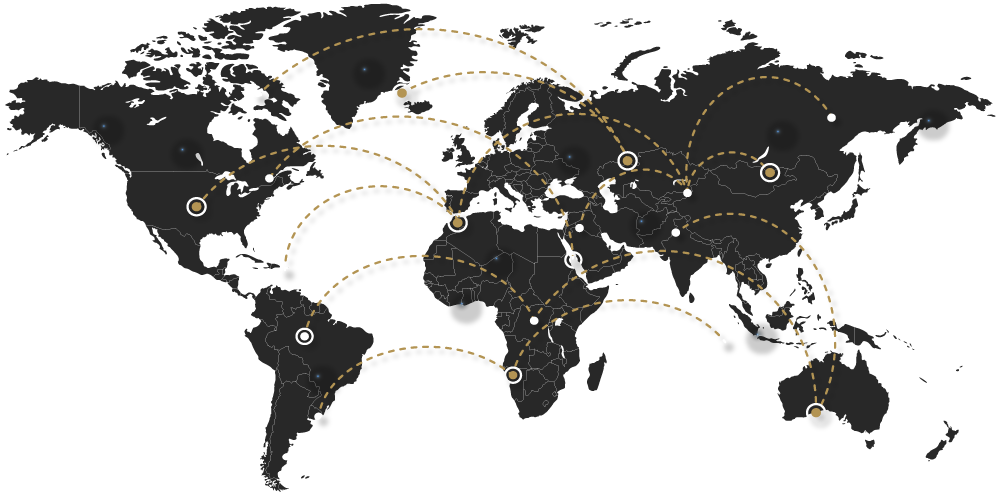
OUR GLOBAL FOOTPRINT STRETCHES OVER ALL 7 CONTINENTS, AS WELL AS A KEY FOCUS ON ALL 54 AFRICAN COUNTRIES, WITH INDUSTRY LEADING PROFESSIONAL PARTNERS IN EACH JURISDICTION.